
Custom Railings in San Ramon, CA | Iron, Cable, Glass & Aluminum Railings
We design, fabricate, and install made-to-order railings and gates for San Ramon Valley homes and buildings, with code-checked drawings and permit and HOA paperwork handled. Free on-site estimates across the Tri-Valley.
- Licensed & Insured
- Custom Fabrication
- Free On-Site Estimates
- Locally Owned & Operated
Custom Railings in San Ramon & the Tri-Valley
San Ramon Custom Railing designs, fabricates, and installs custom railings in San Ramon and across the Tri-Valley, from one stair rail in a Twin Creeks two-story to balcony guards on a Dougherty Valley rental building. We work in wrought iron, stainless cable, tempered glass, and powder-coated aluminum, and we also build gates and handle repairs.
Nothing we install comes off a shelf. Each railing is measured at your house, drawn, then cut, welded, and finished in our shop, so it fits your stair, deck, or foyer exactly.
We are licensed and insured, locally owned and operated, and on a local 925 number. We publish honest price ranges, explain California code in plain English, and prepare the permit drawings and HOA submittals railing jobs here often need. Browse all of our railing services, check the towns we cover, or call (925) 438-6219 for a free on-site estimate.
Why San Ramon Chooses Us
Anchorage Engineered for the Calaveras Fault
USGS describes the Calaveras Fault as bounding the western side of the San Ramon Valley, slipping about 5 to 6 millimeters a year, and the state maps Alquist-Priolo fault zones along its traces through west San Ramon. A railing is only as strong as its posts, so we through-bolt and weld connections instead of relying on lag screws, pins, or glue, and we check every guard against the code's 200-pound concentrated top-rail load before cutting steel.
Finishes Built for 80s-to-100°F Inland Summers
San Ramon averages July highs around 80 to 81°F; Danville, Alamo, and Pleasanton run in the mid-80s; and Alamo occasionally touches 100°F. That long dry season, roughly mid-June to early October, chalks cheap paint and dries out wood rails. Our steel gets a zinc-rich primer and an electrostatic, oven-cured powder coat, with hot-dip galvanizing where a part stays wet. We also talk through lighter colors, which stay cooler to the touch on south-facing decks.
Permit and HOA Paperwork Handled for You
Railing jobs here often involve a building department, an HOA, or both. In San Ramon that means the Permit Center at City Hall, 7000 Bollinger Canyon Rd, and its EnerGov portal. In unincorporated Alamo, Blackhawk, and Diablo it means the County Department of Conservation & Development, which takes digital submittals only. We prepare the stair, handrail, and guard details, drawings, and finish samples reviewers ask for.
Get Your Free Railing Estimate: Fast Callback, No Obligation
Deck season fills the shop schedule early, and permit or HOA review can add weeks, so the sooner we measure, the sooner your railing goes in. Tell us about your project and we will call back to book a free on-site visit.
Our Railing Services
Every service below is designed, built, and installed by our own crew.
What Types of Railing Problems Do We Fix?
Most repair calls start with something that moves, rusts, or rots. Here is what we fix most often through our railing repair and SB 721 service.
Wobbly Posts and Failed Anchorage
A post that rocks usually means fasteners have pulled out of rotted framing, a base plate has cracked, or a core-drilled post has lost its grout. Code expects a guard to resist a 200-pound load at the top rail, and a loose post cannot. We repair or block the framing and re-anchor with through-bolts or new welded plates, not another lag screw in the same tired hole.
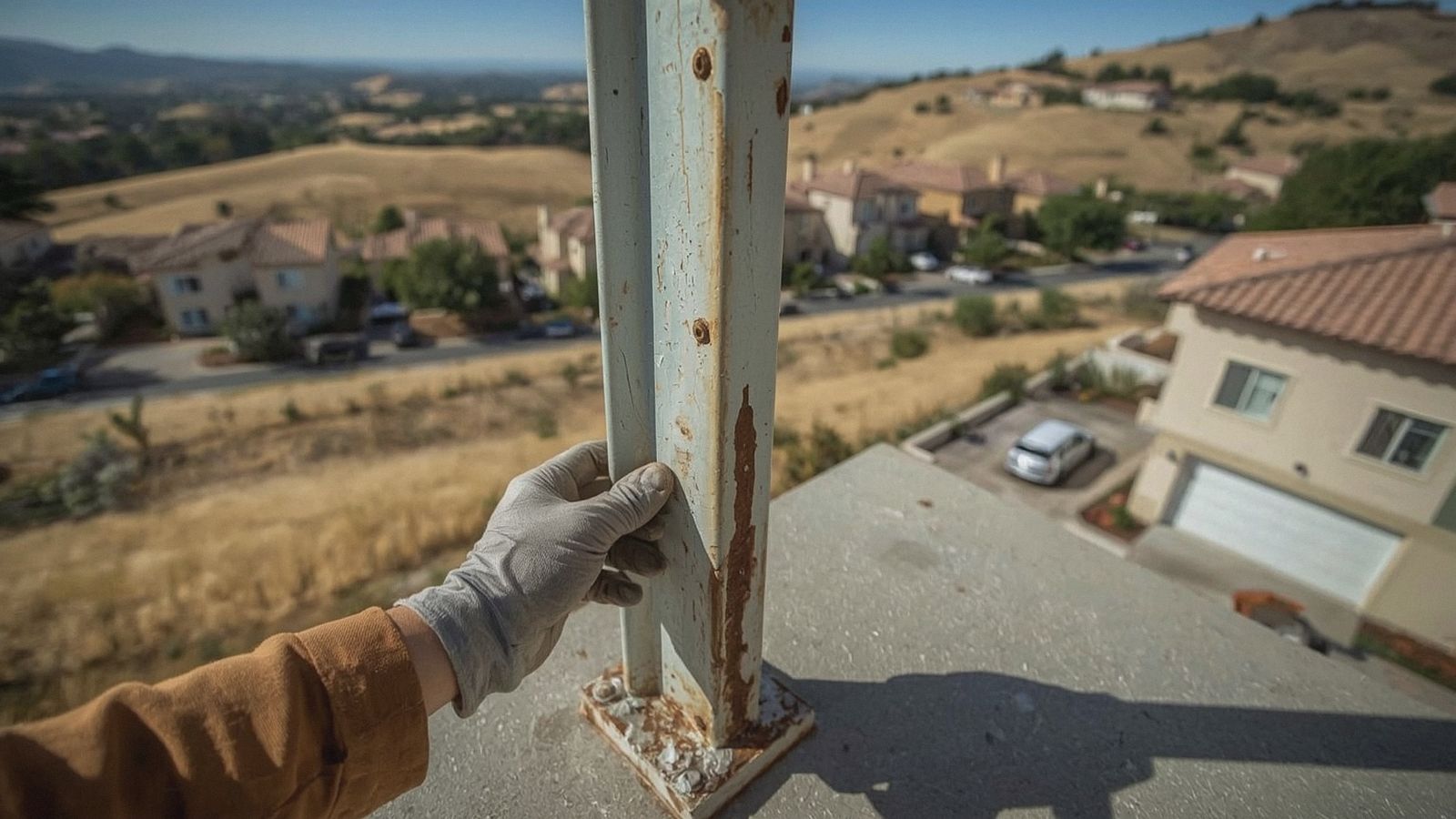
Rust Bleeding at Post Bases
Orange streaks on stucco or concrete start where water sits: at post bases, inside tubing with no drain holes, and under cracked paint. Inland there is no salt air, but sprinkler overspray and winter rain do the job anyway. We cut out compromised steel, weld in new sections, and refinish with zinc primer and powder coat, and we tell you plainly if replacement makes more sense.
Rotted or Checked Wood Deck Rails
Census data (ACS 2020–24) shows about 17% of San Ramon's homes and 30% of Danville's were built in the 1970s, so plenty of original wood deck rails are at the end of their life. Heat dries the wood until it checks, splits, and loosens fasteners. We replace failing wood rails with metal, cable, or glass, and flag soft framing before new posts go on it.
Loose or Missing Balusters
Under the California code's 4-inch sphere rule, no opening in a guard should let a 4-inch ball pass, and one loose or missing picket in a stair rail can break that rule. We re-set loose wood or iron balusters, fabricate matching replacements for missing ones, and check every gap with a gauge before we leave, so a curious toddler cannot slip through.
Old 36-Inch Guards on Older Homes
Many older homes carry 36-inch guards, while today's California code calls for 42 inches where a walking surface sits more than 30 inches above grade. Existing rails can usually stay, but replacing more than about half of a guard is commonly treated as new work that must meet current code. We confirm the rule with your building department before drawing anything.
Cracked Welds and Broken Connections
Hairline cracks at welds, split collars, and snapped bracket screws show up most on stair handrails, which take hard daily use. Code requires a handrail to resist a 200-pound concentrated load, so a failed weld is a safety problem, not a looks issue. We grind out the cracked metal, re-weld the joint properly, and refinish it so it does not become the next rust spot.
SB 721 Inspection Failures
SB 721 covers rental buildings with three or more units and elevated elements, guardrails included, more than 6 feet above grade. The first-inspection deadline of January 1, 2026 has passed, and re-inspections run every six years. San Ramon's balcony-law page gives owners 120 days to apply for a repair permit. We fabricate the replacement rails inspectors call for. See our SB 721 guide for Tri-Valley owners.
What Types of Railings Do We Build in San Ramon?
We build every major railing type in-house. Each links to its own page with more detail.
Wrought Iron and Ornamental Iron Railings
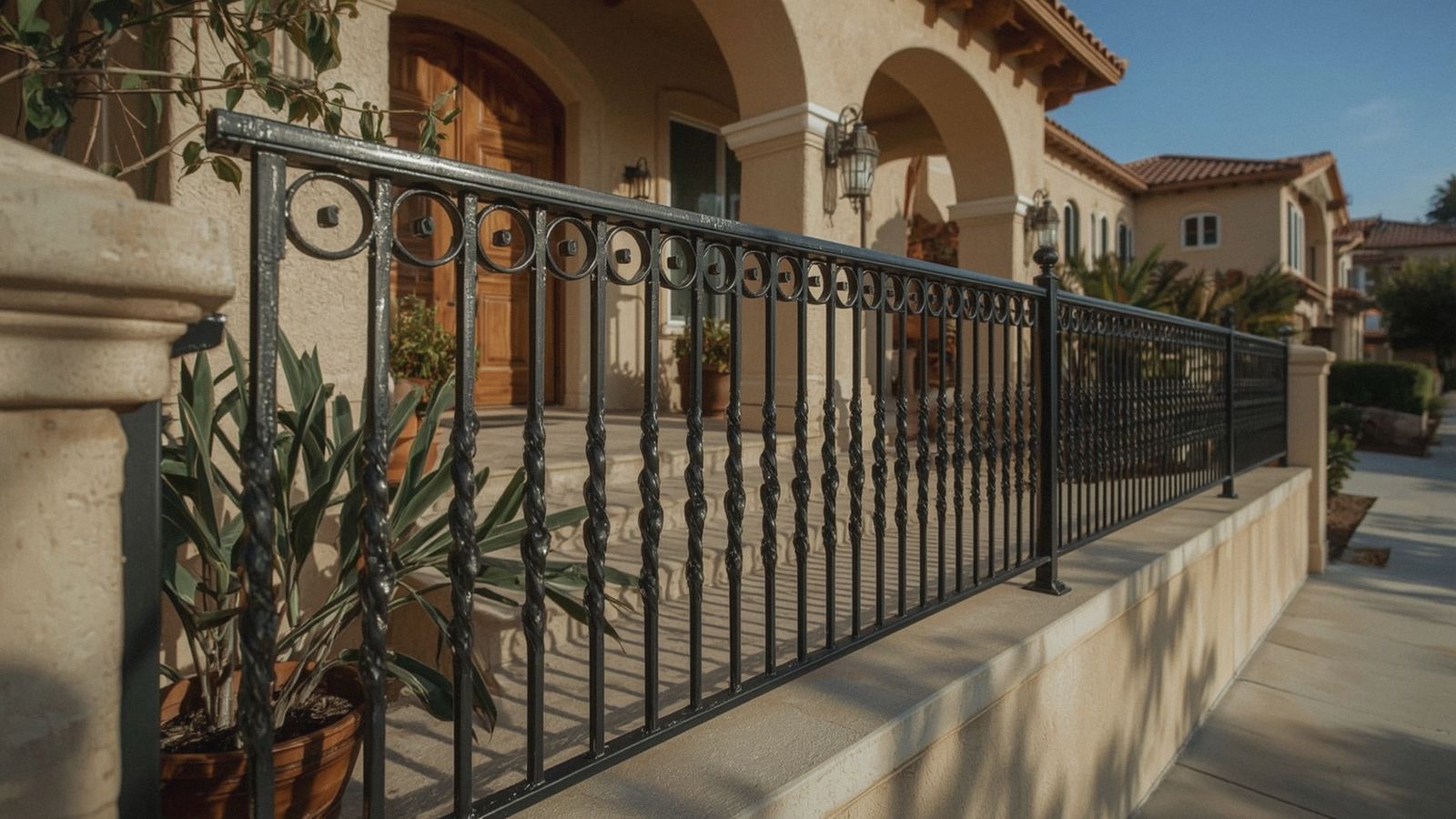
Iron is the classic choice for entry stairs, porches, and formal balconies, and many Danville and Blackhawk homeowners already have iron they want matched. We fabricate in mild carbon steel, adding hand-forged scrolls, collars, and twisted bars where the design calls for them, then finish with zinc primer and oven-cured powder coat. Installed ornamental iron typically runs $65–$135 per linear foot, and fully hand-forged work $300–$900. See our wrought iron railings for picket styles, cap rails, and newel options.
Stainless Cable Railings
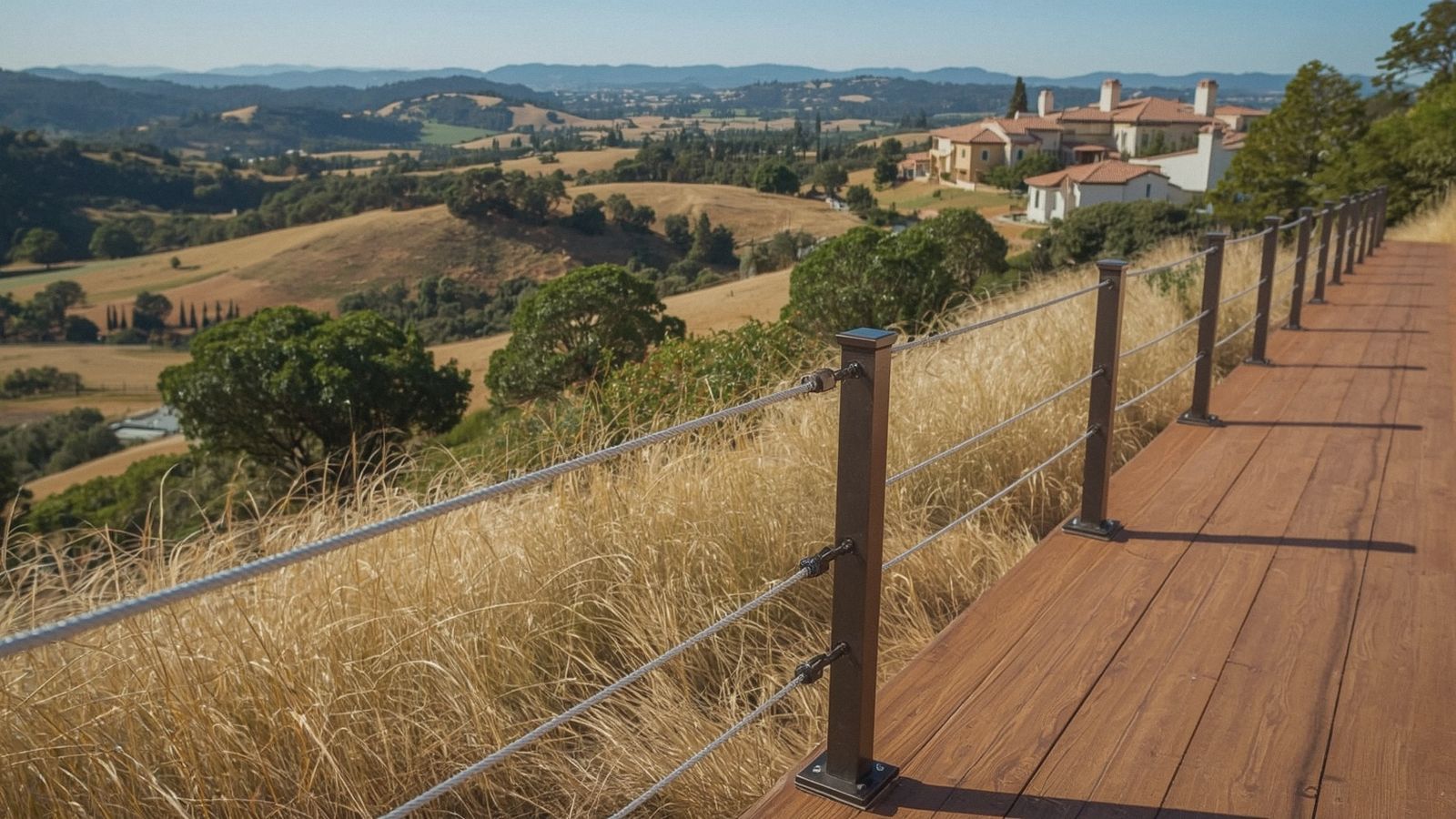
Cable suits decks facing Mt. Diablo, the Las Trampas ridgeline, or open space, because thin 1x19 stainless aircraft cable nearly disappears from a distance. The engineering matters: posts about 4 feet apart limit cable deflection, and spacing near 3 inches keeps a tensioned run within the 4-inch sphere rule. Corner and end posts take the most tension, so we size them heavier than line posts. Installed cable typically runs $75–$260 per linear foot. Learn more about cable railings for Tri-Valley decks.
Glass Railings
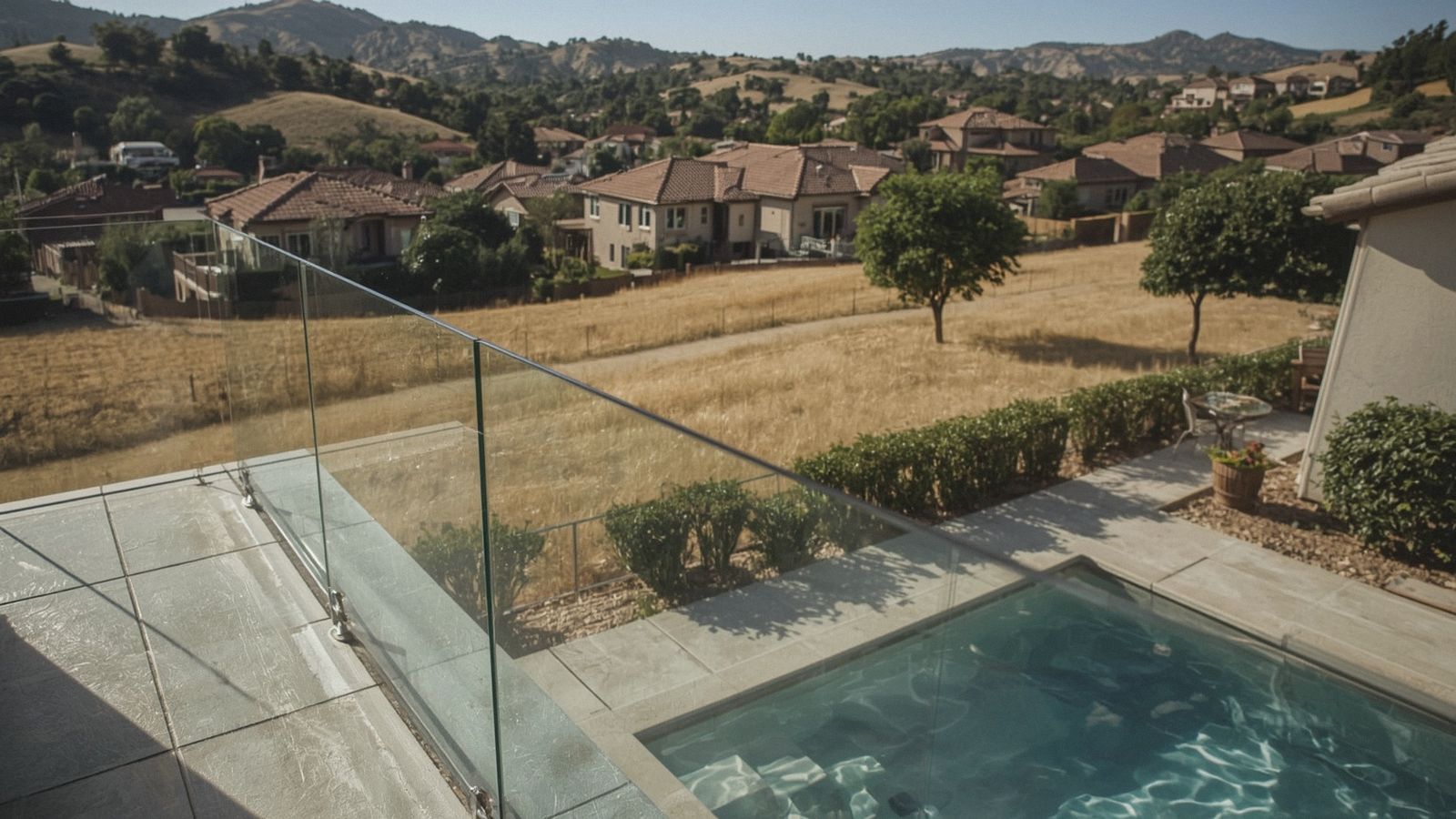
Glass gives the most open view and blocks afternoon wind on exposed decks. We install tempered or laminated panels in framed, post-and-clamp, standoff, or frameless base-shoe systems sized for the code's guard loads and your layout. Glass is the premium tier, roughly $150–$600 per linear foot installed, driven by panel thickness, hardware, and custom cuts. Expect more cleaning in dusty summers, especially on decks near open hillsides. Visit our glass railings page to compare framed and frameless options and hardware finishes.
Powder-Coated Aluminum Railings
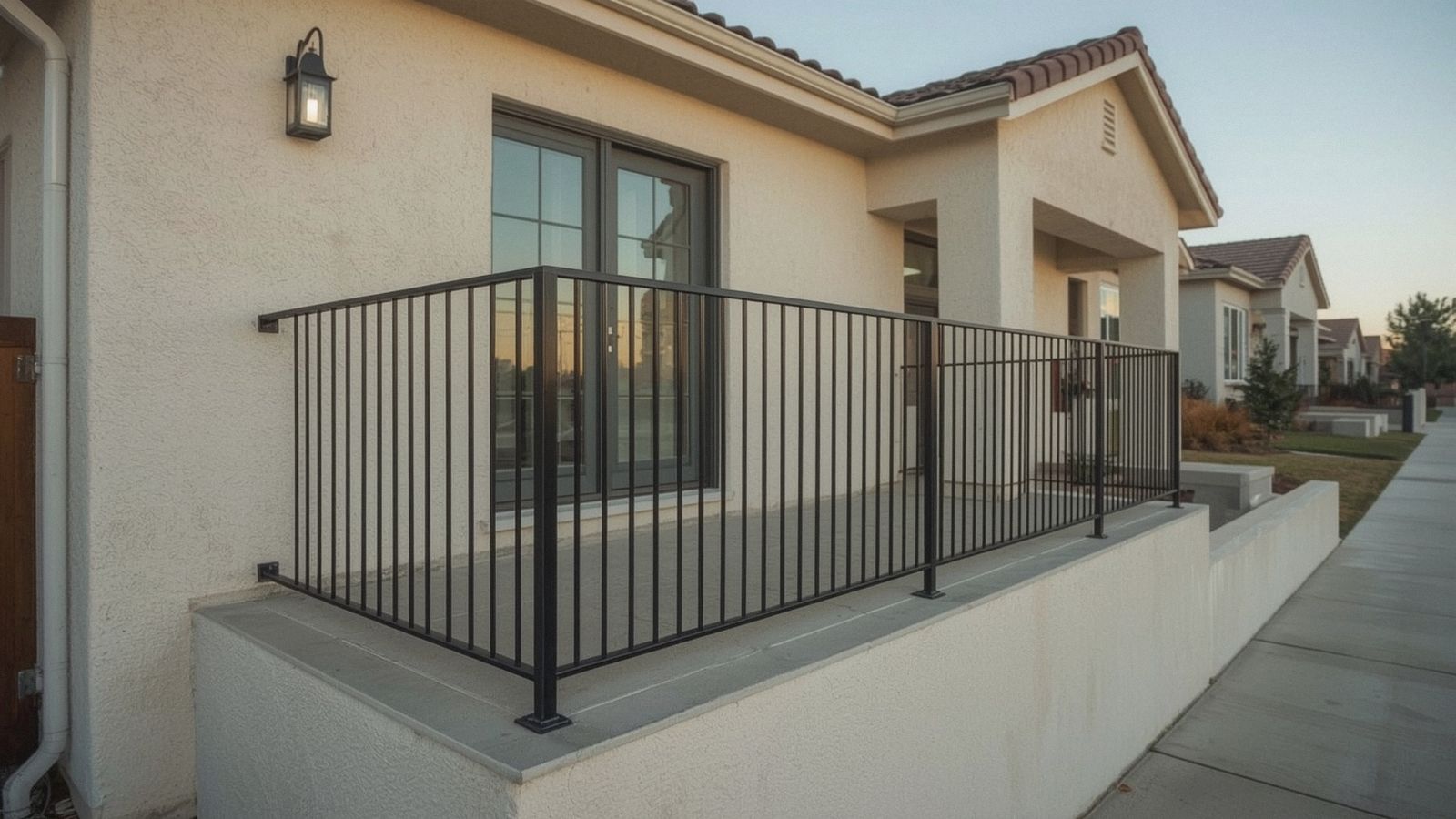
Aluminum will not rust, is light enough for long deck runs, and takes powder coat in nearly any color an HOA palette specifies. That makes it a practical pick for Dublin and Dougherty Valley homes where an association wants a uniform look on every balcony. We use welded sections rather than snap-together kits where the design allows, for a stiffer, cleaner rail. Installed prices usually land between $50 and $200 per linear foot. Explore aluminum railings to see profiles, post options, and stock colors.
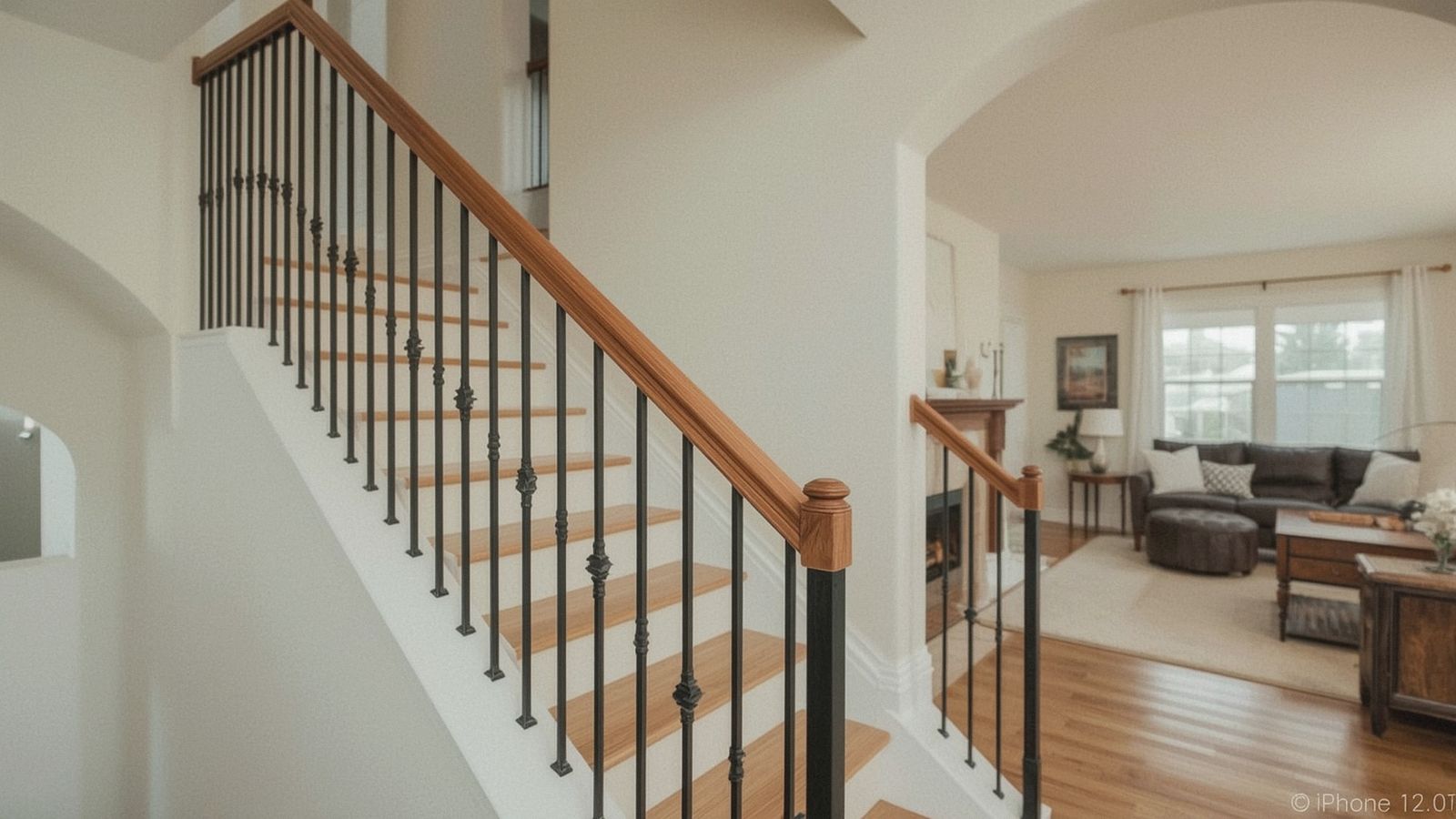
Interior Stair Railings
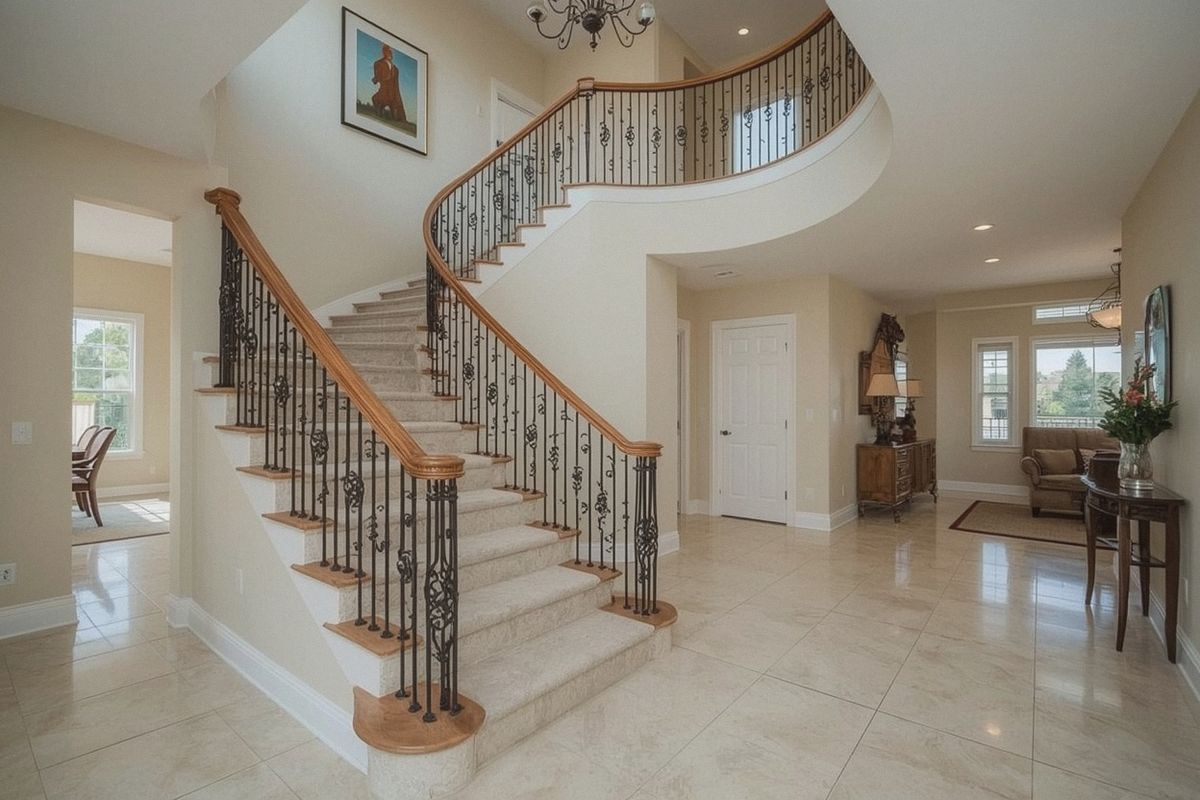
San Ramon's 1980s and 1990s building (19% and 17% of today's homes, per ACS 2020–24) left many two-story foyers with builder-grade oak rails and wood spindles. Swapping those spindles for iron balusters, or replacing the whole balustrade, is one of our most common jobs. Handrails sit 34 to 38 inches above the stair nosing and must be graspable along the full run. Interior stair work runs about $40–$100 per linear foot, roughly $900–$2,500 for a typical run. See interior stair railings.
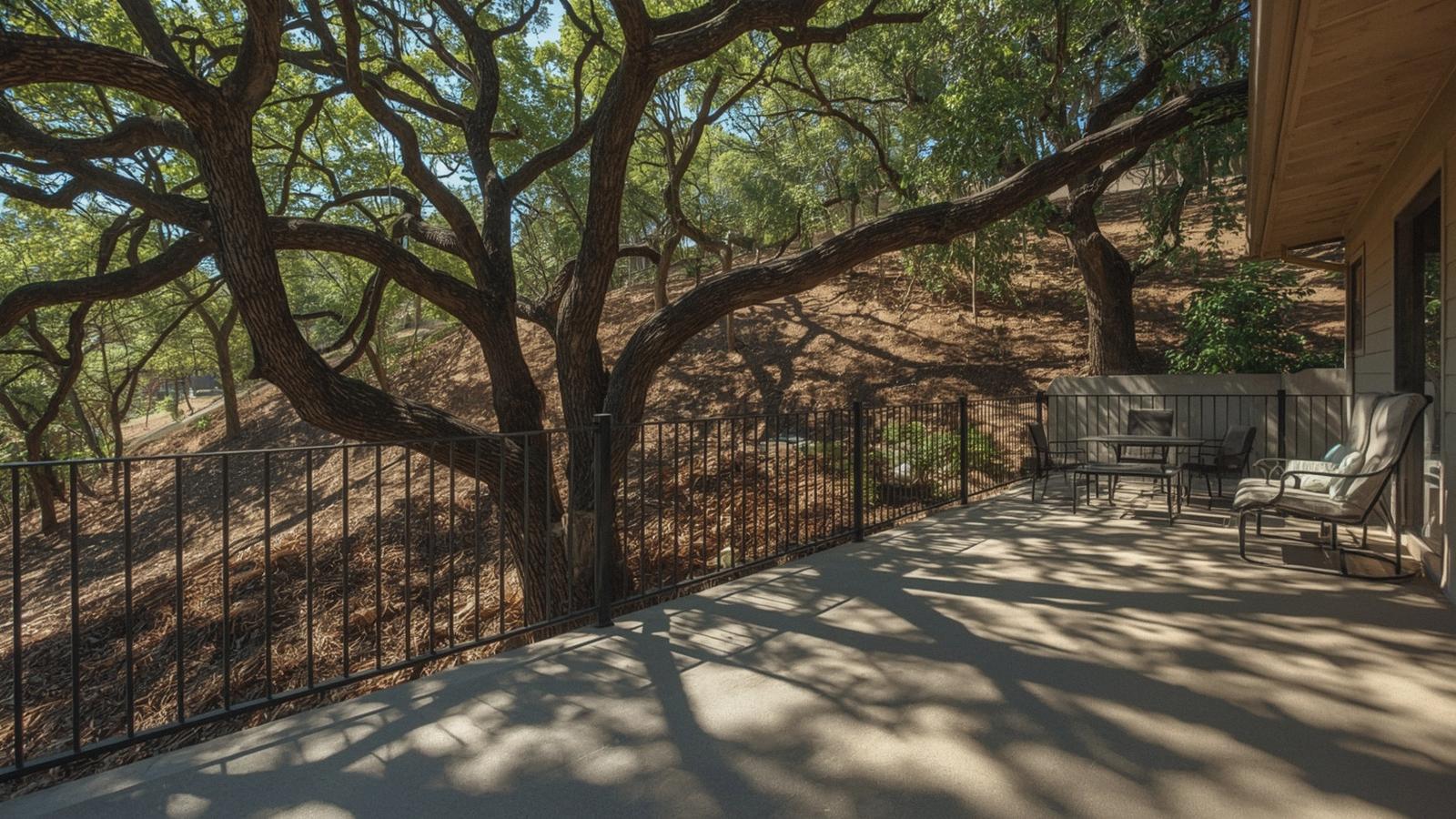
Deck and Balcony Railings
Any deck or balcony more than 30 inches above grade needs a guard at least 42 inches tall that resists a 200-pound load applied at the top rail. We build deck and balcony guards in every material above, matching infill to your view, HOA, and budget, and we check the framing the posts will bolt into. Installed pricing spans about $20–$600 per linear foot, with most projects between $400 and $4,800. Read more on deck and balcony railings, including replacing aging wood rails.
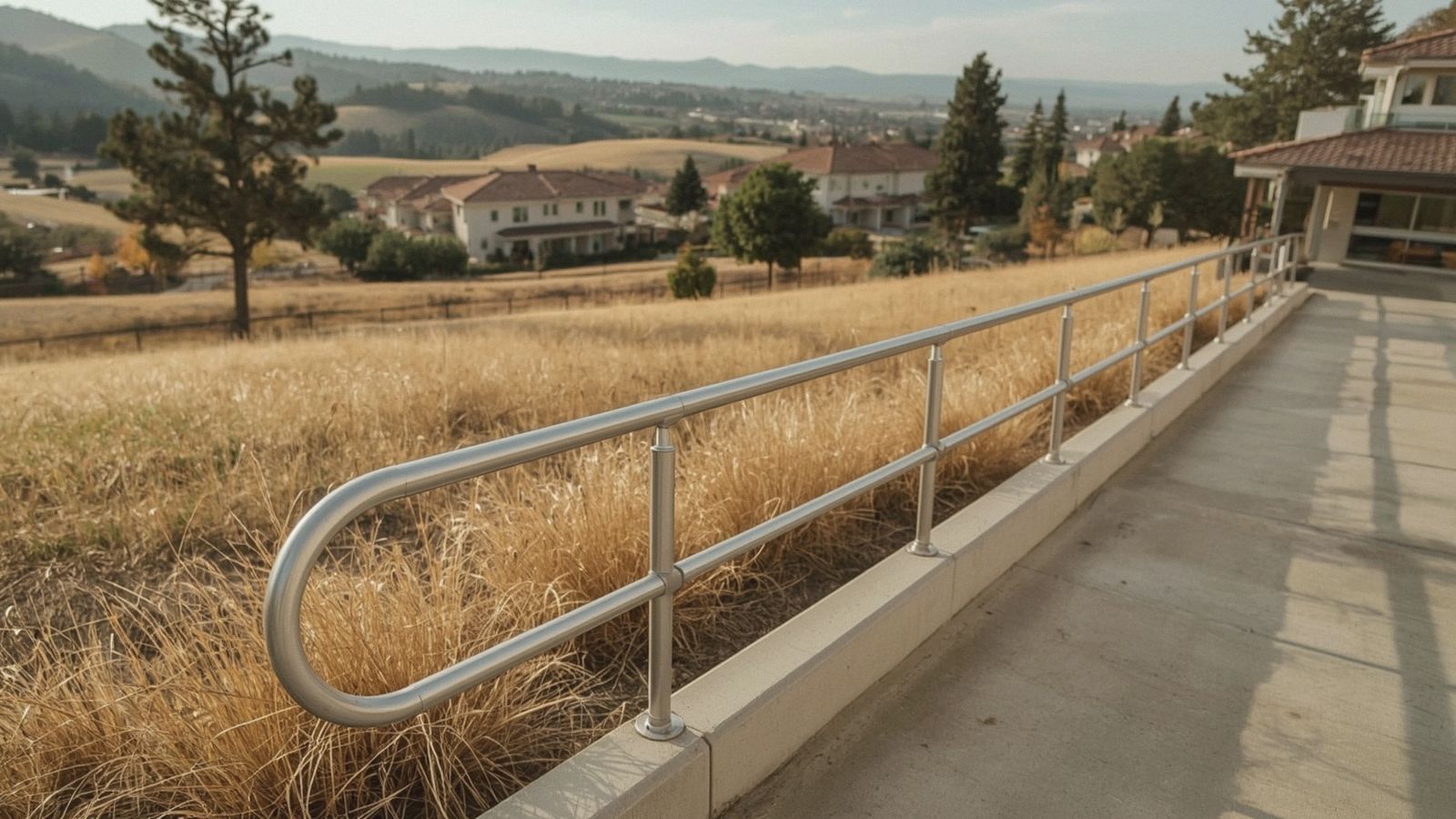
ADA and Commercial Handrails
Offices, clinics, retail centers, and apartment buildings around Bishop Ranch need handrails that meet accessibility rules, not just look good. That means a graspable profile 1¼ to 2 inches in diameter, mounted 34 to 38 inches high with at least 1½ inches of wall clearance, continuous along the run, and extending at least 12 inches past the top riser. Pricing runs roughly $20–$120 per foot, material plus labor. Learn about ADA and commercial handrails for property managers, owners, and general contractors.
Custom Gates
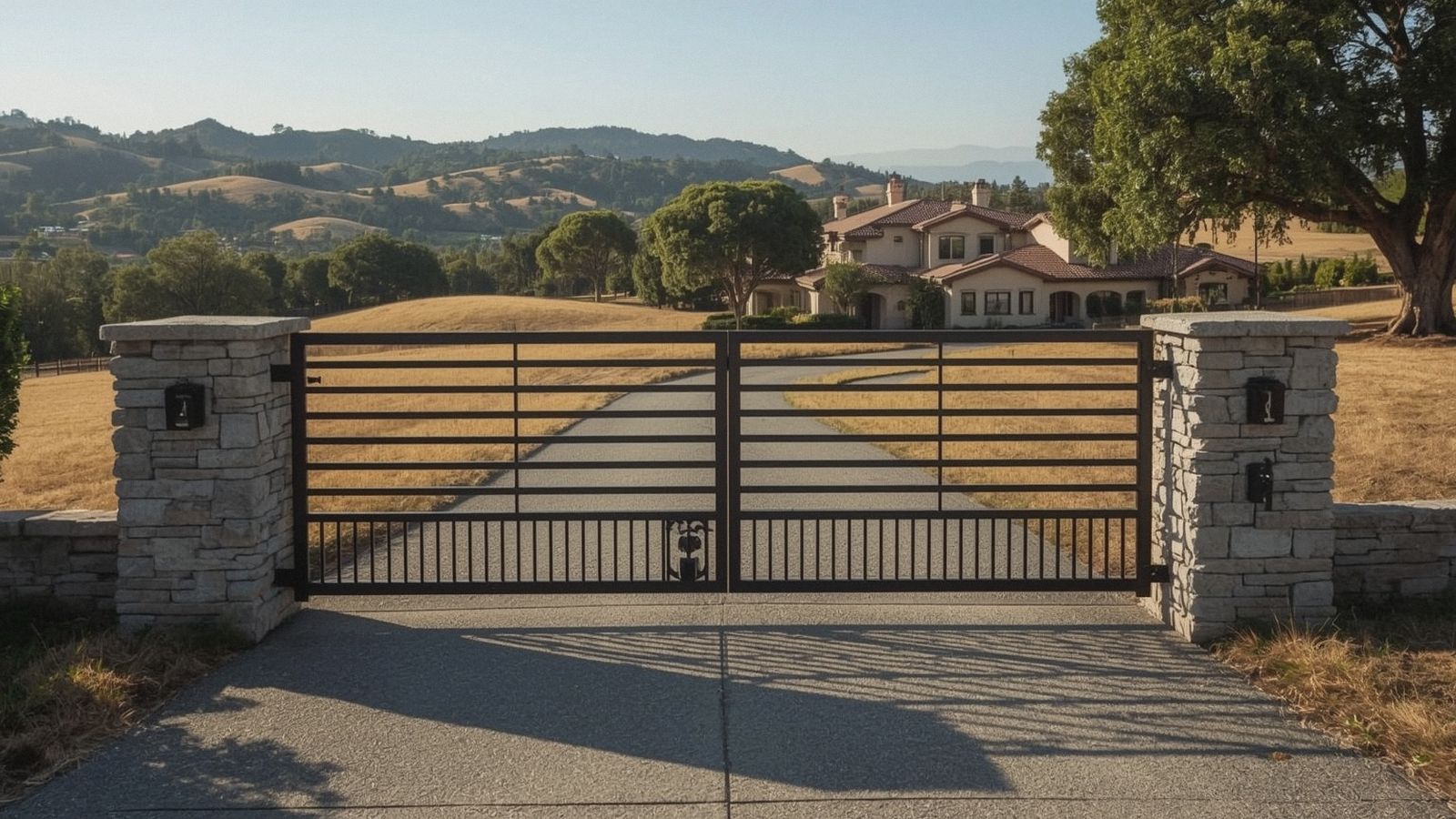
We build driveway, side-yard, garden, and pool gates that match our railings, so the iron on your front steps and the gate by the garage read as one design. Pool gates are a special case: California's pool safety rules call for barrier gates that are self-closing and self-latching, and we build and hang them accordingly. Every gate gets a welded frame, adjustable hinges, and our primer and powder coat system. See custom gates for driveway, walk, and pool gate styles.
How Custom Railing Works
1. Free On-Site Consult & Measure
We measure every run, rise, and corner, check what the rail will anchor into, and discuss materials and pricing.
2. CAD & Shop Drawings
Drawings show post spacing, infill, heights, and connections, so you approve the design before anything is built.
3. Code, Permit & HOA Review
Every drawing is checked against the 42-inch guard rule, the 4-inch sphere rule, and handrail heights. We prepare permit and HOA submittals.
4. Shop Fabrication & Welding
Your railing is cut, fitted, and welded in our shop, where tolerances are tighter than field-built work.
5. Finishing
Steel is cleaned, zinc-primed, and powder coated, or hot-dip galvanized where a part will stay wet.
6. Installation & Anchoring
We anchor with through-bolts, welded plates, or core-drilled posts, matched to your framing or concrete.
7. Final Code & Safety Check
We check heights, gaps, and post stiffness, and meet the building inspector if your project has a permit.
What Custom Railing Costs in San Ramon
Honest 2026 installed ranges for the Tri-Valley, where labor runs high. Use them for budgeting, not as quotes.
| Railing type | Installed per linear foot | Typical project |
|---|---|---|
| Wrought iron / ornamental | $65–$135 (hand-forged $300–$900) | ~$700–$6,000 |
| Aluminum (powder-coated) | $50–$200 | ~$400–$4,800 |
| Cable railing | $75–$260 | ~$3,750–$13,000 (about $9,000 for 50 ft) |
| Glass railing | $150–$600 | Premium tier |
| Interior stair railing | $40–$100 | ~$900–$2,500 (about 25 ft) |
| Exterior deck railing | $20–$600 | ~$400–$4,800 |
| ADA / commercial handrail | $20–$120 per ft, material plus labor | Varies by run |
- Permits typically add about $50–$500.
- Corners and turns add roughly 20–30%; stairs cost more than level runs.
- Hillside access, HOA-specified finishes, and custom forging push toward the high end.
We quote only after a free on-site estimate. For more detail, read our 2026 San Ramon railing cost guide or call (925) 438-6219.
Iron vs. Aluminum vs. Cable vs. Glass
How each material handles Tri-Valley heat, HOA review, fire season, and views.
| Material | Look | Inland heat & sun | Wildfire | HOA fit | Views | Cost tier |
|---|---|---|---|---|---|---|
| Wrought iron | Traditional, ornamental | Durable under powder coat; dark colors get hot | Noncombustible | Fits traditional neighborhoods | Pickets interrupt the view | $$–$$$$ |
| Powder-coated aluminum | Clean, any color | Will not rust; light colors stay cooler | Noncombustible | Easy to match an HOA color across units | Similar to iron | $–$$$ |
| Stainless cable | Minimal, modern | 316 stainless handles heat; re-tension periodically | Noncombustible; a wood cap adds fuel | Some HOAs want drawings or samples first | Near-open view | $$–$$$ |
| Tempered glass | Sleek, nearly invisible | Unaffected by heat; shows summer dust | Noncombustible | Ask your HOA about reflectivity | Fully open view plus a wind break | $$$–$$$$ |
All four beat wood in fire season because metal and tempered glass do not burn. For a deeper side-by-side, read cable vs. glass vs. iron railing.
Built for San Ramon Valley Conditions
A railing in the San Ramon Valley faces different stresses than one on the coast. We design for four.
Living on the Calaveras Fault
The northern Calaveras Fault is part of the San Andreas system. San Ramon's GIS shows its traces through west San Ramon near Old Crow Canyon Road and Westside Drive, continuing south into Dublin and Pleasanton. Shaking loads a railing's connections first, so we default to welded joints and through-bolted posts tied into solid framing.
Long, Hot, Dry Summers
Inland, the finish enemy is heat and sun, not salt. Months of dry weather fade low-grade paint and dry out wood rails until they split. Oven-cured powder coat over zinc primer, or galvanizing where water collects, keeps steel protected with basic washing.
The 2025 Fire Hazard Map
In February 2025 the State Fire Marshal released new local-area maps that, for the first time, add Moderate and High zones. San Ramon has no Very High zones, though parts of eastern Dougherty Valley are mapped High. Parts of Danville are mapped Very High, and Diablo and the west Alamo hills are State Responsibility Area High. Check your address at osfm.fire.ca.gov/fhsz, and confirm with your building department which wildland rules apply, since that question is not settled for the newer zones. Either way, metal and glass railings do not burn like a wood rail at the deck edge. See our wildfire-resistant deck railing guide.
HOAs and a Young Housing Stock
Roughly 40% of San Ramon's homes were built in 2000 or later, much of it in Dougherty Valley, where building began in 1996 in Gale Ranch and Windemere. Many HOAs require architectural review before exterior changes; we prepare the drawings and samples. See how HOA railing approval works.
Serving San Ramon & the Tri-Valley
Our home base is San Ramon, covering both ZIP codes, 94582 and 94583, from Dougherty Valley and Gale Ranch to Twin Creeks, Bishop Ranch, and the neighborhoods along the Iron Horse Trail. To the north we work throughout Danville and in unincorporated Blackhawk, Alamo, and Diablo, where permits run through Contra Costa County. Across the county line we serve Dublin and Pleasanton, and up the I-680 corridor we build for homeowners and property managers in Walnut Creek.
Each town has its own building department and permit portal, and each city page covers those specifics. Elsewhere nearby? Call (925) 438-6219 and ask.
Get a Free On-Site Estimate
A wobbly deck rail, a tired oak-and-spindle staircase, a view deck that deserves cable or glass, or a rental building with SB 721 repairs: we would like to see it in person. The estimate is free, on site, and no pressure. You get a clear price range, a plan for permits and HOA review, and an honest answer on repair versus replacement.
Call San Ramon Custom Railing at (925) 438-6219, seven days a week from 7am to 6pm, or request your free estimate online. Learn more about our shop.
Questions, Answered
How much does a custom railing cost per linear foot in San Ramon?
As 2026 installed ranges: ornamental iron runs about $65–$135 per linear foot (hand-forged $300–$900), powder-coated aluminum $50–$200, stainless cable $75–$260, glass $150–$600, and interior stair railings $40–$100. Corners, stairs, and hillside access push costs up. We give a firm number only after a free on-site estimate.
Do I need a permit to replace a railing in San Ramon?
Often, yes, especially for deck, balcony, and stair guards. San Ramon permits go through the Permit Center at City Hall, 7000 Bollinger Canyon Rd, or the EnerGov online portal. Most Tri-Valley departments, including Dublin, Pleasanton, Walnut Creek, and the County, exempt only small, low, detached decks, so confirm with your city. We prepare the railing details reviewers ask for.
How tall does a deck railing have to be in California?
A guard is required where a walking surface is more than 30 inches above grade, and Tri-Valley building departments enforce a 42-inch minimum. Openings must not pass a 4-inch sphere (6 inches at the stair tread triangle), and stair handrails sit 34 to 38 inches above the nosing. Older homes often have 36-inch guards that can usually stay until replaced.
Is cable railing legal in California?
Yes, as long as the installed system passes the 4-inch sphere test, which takes posts about 4 feet apart, cable spacing near 3 inches, and proper tension. Some parents worry about the ladder effect, since horizontal cables can be climbed. With young children, we will also show you vertical options.
Should I choose cable or glass railing for my view deck?
Both keep the view. Cable costs less (about $75–$260 per linear foot versus $150–$600 for glass) and lets breezes through, but needs occasional re-tensioning. Glass gives a fully open view and blocks wind on exposed decks, but shows dust in dry summers. Both are noncombustible. We bring samples to the estimate so you can compare them on site.
Will an iron railing rust, and how much maintenance does it need?
Bare or simply painted steel rusts where water sits. We prime with zinc and apply an oven-cured powder coat, and galvanize parts that stay wet. Inland San Ramon has no salt air, so care is simple: rinse it a couple of times a year, keep sprinklers off it, and touch up chips quickly. Aluminum is the rust-free option.
Do I need HOA approval for a new railing?
Many HOAs in San Ramon, Dougherty Valley, Blackhawk, and across the Tri-Valley require architectural review before exterior changes, including railings. Expect to submit drawings and often a finish sample. Pleasanton's permit application even asks whether your property is under HOA design review. We prepare the submittal, and HOA approval should come before the permit.
Can I replace wood stair spindles with iron balusters and keep my handrail?
Yes, and it is one of our most common projects in 1980s and 1990s San Ramon and Dublin homes. If your oak handrail and newel posts are solid, we swap only the spindles for iron balusters, keep the 4-inch spacing, and can match or refinish the wood. If the rail is loose or the wrong height, we will recommend a full replacement instead.
What does SB 721 require for balconies and railings?
SB 721 applies to rental buildings with three or more units. Elevated elements more than 6 feet above grade, including guardrails and handrails, must be inspected; the first deadline was January 1, 2026, and re-inspections are due every six years. San Ramon's balcony-law page gives owners 120 days to apply for a repair permit. We handle the railing repairs.
What railings are allowed in high fire hazard zones?
Metal and tempered glass railings are noncombustible, a safer choice than wood at a deck's ember-catching edge. California's wildland building rules apply mainly to new homes in certain mapped zones, and remodels are generally exempt, but treatment of the newer High and Moderate local zones is not settled. Check your address at osfm.fire.ca.gov/fhsz and confirm with your building department.
Do you offer a warranty on your railings?
We explain warranty terms in writing with your estimate, so you know what is covered for fabrication, finish, and installation before you sign. The best protection is a railing built right: welded and through-bolted connections, zinc primer under powder coat, and a final check of heights, gaps, and post stiffness before we leave.
What areas do you serve?
We serve all of San Ramon (94582 and 94583), plus Danville, Blackhawk, Alamo, Diablo, Dublin, Pleasanton, and Walnut Creek, covering both the Contra Costa and Alameda County sides of the Tri-Valley. If you are just outside these towns, call (925) 438-6219 and ask, since we often travel a bit farther for the right project.
Ready to get started?
San Ramon Custom Railing provides fast, same-day custom railing across San Ramon, CA and the surrounding area, flat-rate pricing, licensed and insured, with 24/7 emergency service. Call now, request a free estimate.