
Custom Railing Cost in San Ramon: 2026 Price Guide
What custom railing costs in San Ramon in 2026
Custom railing cost in San Ramon in 2026 usually lands between about $50 and $260 per installed linear foot for iron, aluminum and cable, with frameless glass running higher. That is a wide spread on purpose. A straight, flat run of powder-coated aluminum on a Twin Creeks deck and a glass guard on a sloped Dougherty Valley lot are different projects, even at the same length.
Below are the ranges we use for budgeting, three worked examples, and the factors that push a Tri-Valley quote up or down. Bay Area labor and hillside access mean local projects tend to sit in the upper half of national ranges. Treat everything here as a planning number; the firm price comes after a free on-site measure.
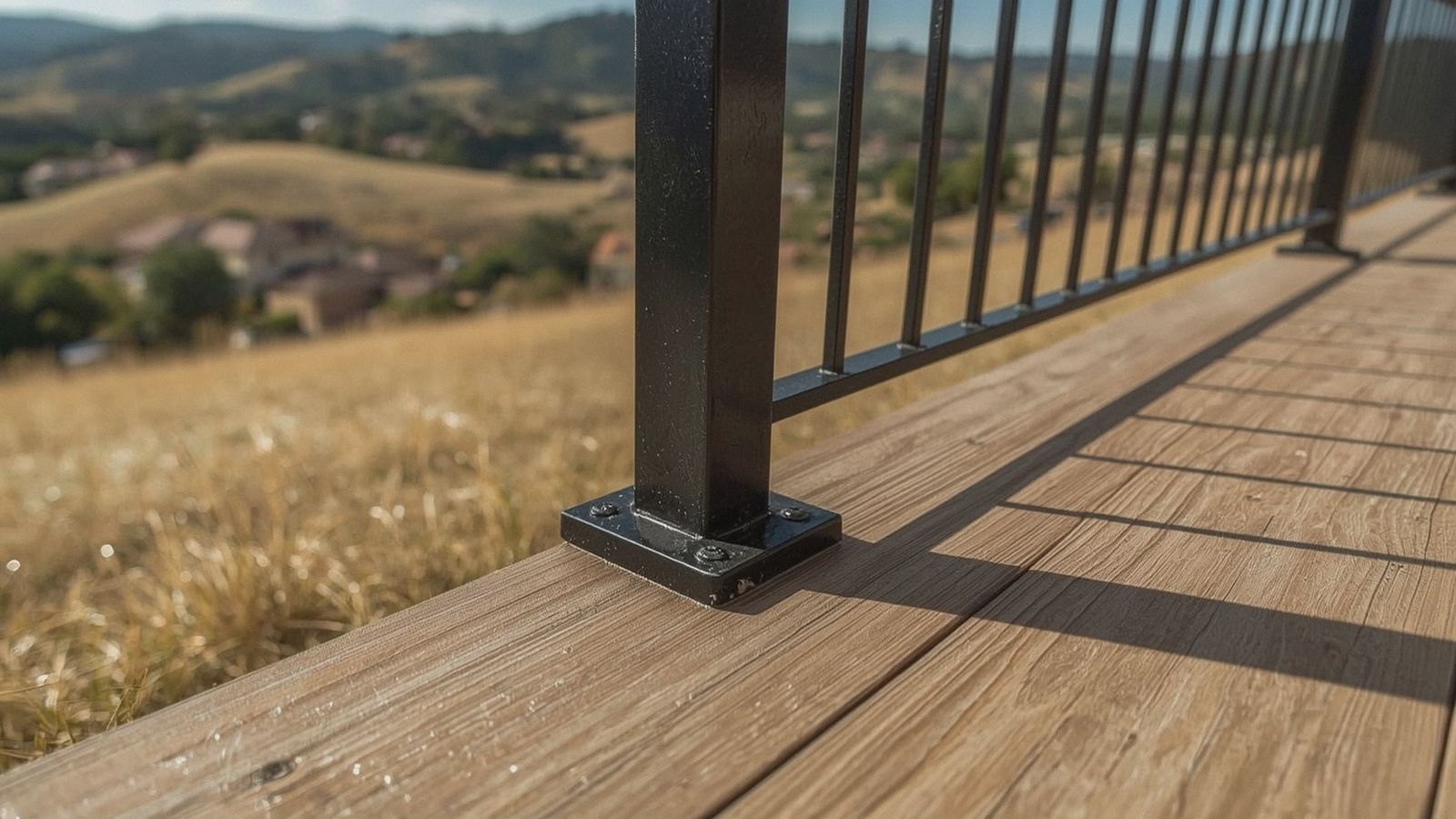
Price per linear foot by material
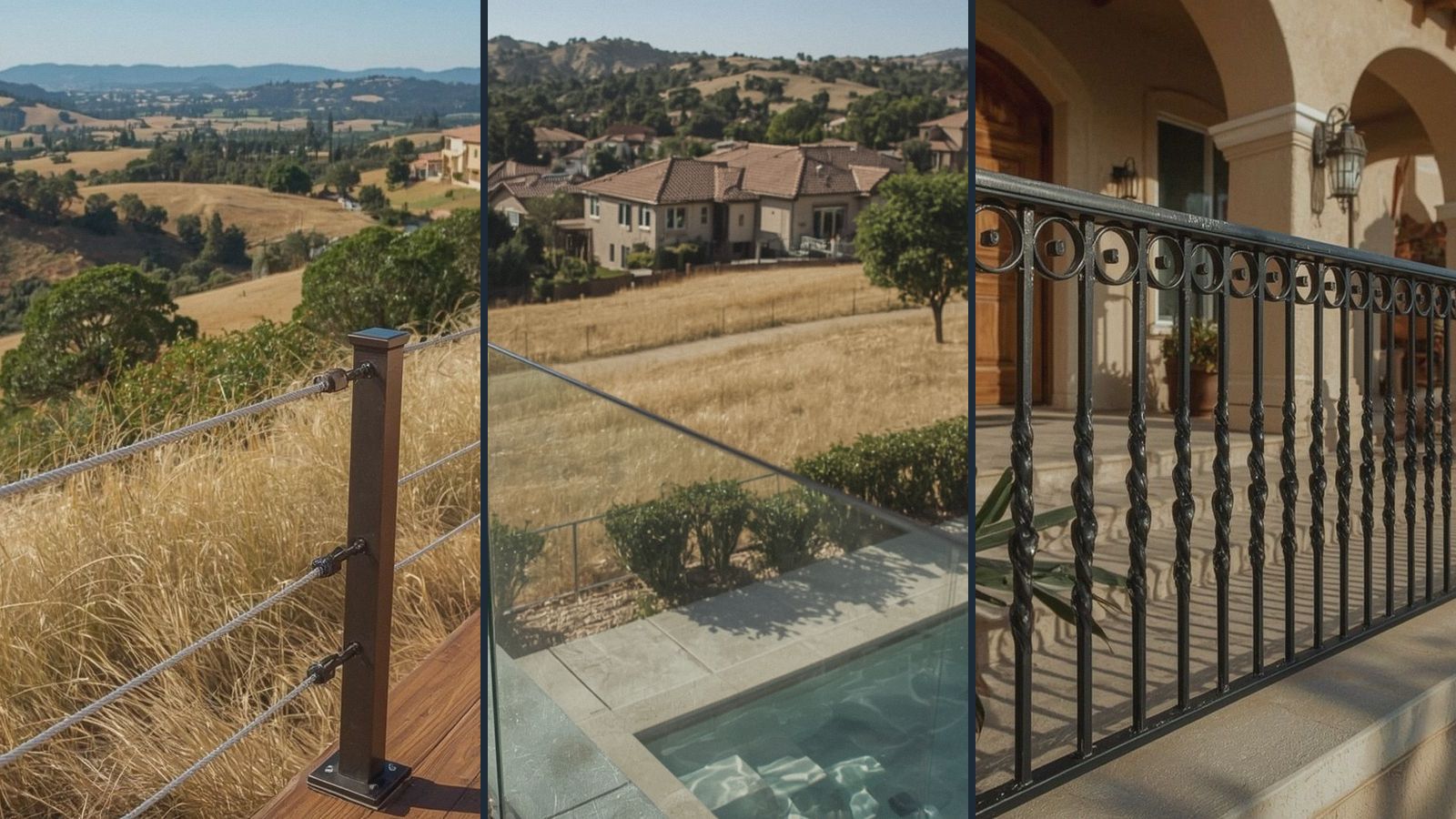
| Railing type | Installed per linear foot | Typical project |
|---|---|---|
| Wrought iron / ornamental | $65–$135 (hand-forged $300–$900) | About $700–$6,000 |
| Aluminum, powder-coated | $50–$200 | About $400–$4,800 |
| Cable railing | $75–$260 | About $3,750–$13,000 |
| Glass railing | $150–$600 | Premium tier |
| Interior stair railing | $40–$100 | About $900–$2,500 for roughly 25 feet |
| Exterior deck railing | $20–$600 | About $400–$4,800 |
| ADA / commercial handrail | $20–$120 per foot material, plus labor | Varies by run |
The deck railing row is broad because it covers everything from a basic wood-to-metal swap to structural glass. Cable projects around 50 feet often average near $9,000, which is a useful sanity check against bids.
Planning a railing project in San Ramon or the Tri-Valley? We measure on site for free and give you a written range before anything is fabricated.
Worked example: a 40-foot deck
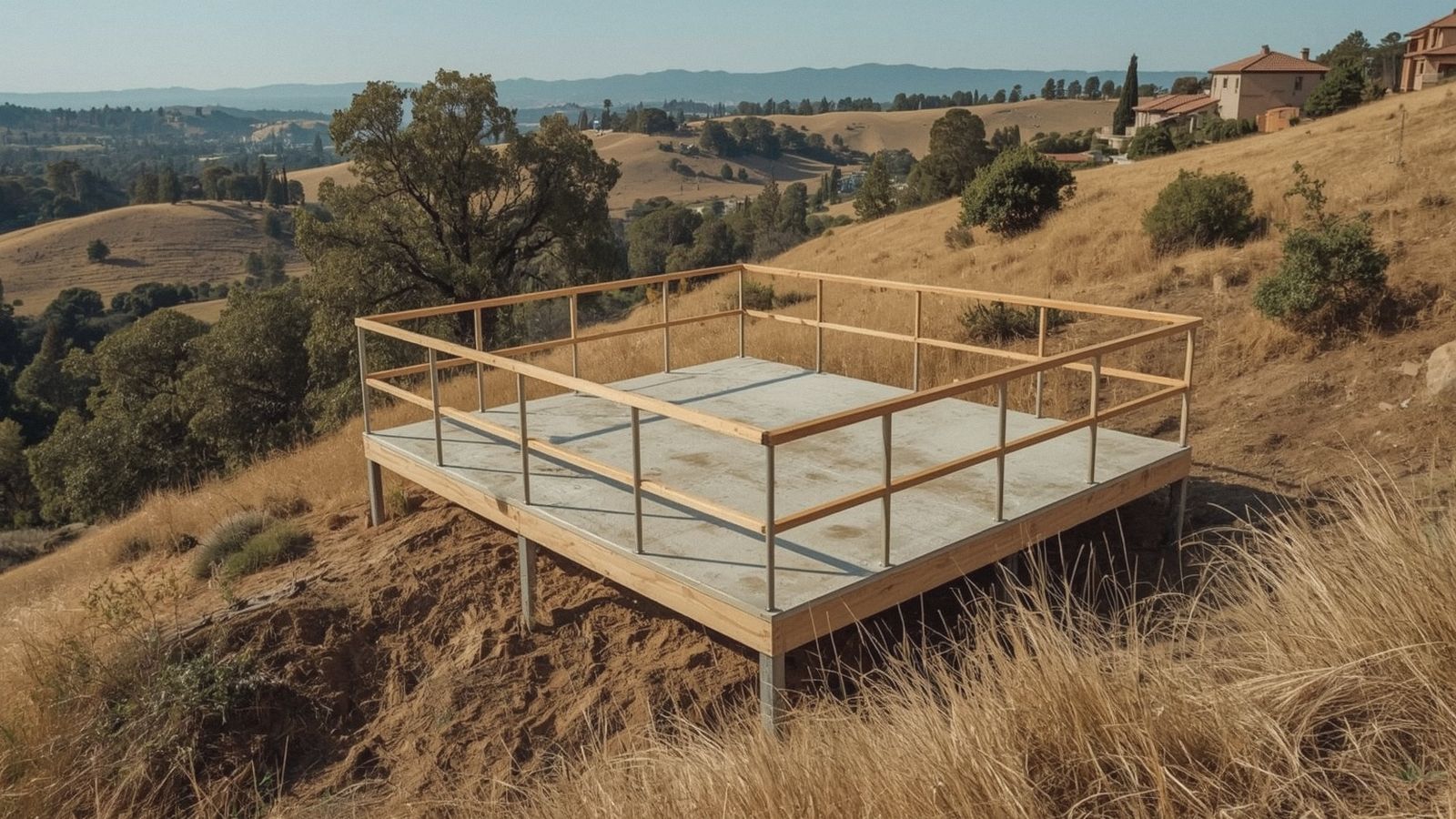
Picture a second-story deck off a San Ramon family room, 40 feet of guard along three sides, no stairs. Using only the base per-foot ranges:
| Material | 40 ft at base range |
|---|---|
| Wrought iron, standard pickets | $2,600–$5,400 |
| Powder-coated aluminum | $2,000–$8,000 |
| Stainless cable | $3,000–$10,400 |
| Tempered glass | $6,000–$24,000 |
Now add reality. Three sides means two corners, and corners or turns typically add 20 to 30 percent to the runs they affect. Taking off a rotted wood rail adds labor and disposal. If the deck sits more than 30 inches above grade, plan on a permit, which runs roughly $50 to $500. Cable also needs a post about every 4 feet to keep cable deflection in check, so a 40-foot run carries more posts than the same length in iron.
Put together, a realistic standard-iron version of this deck often lands somewhat above the base range once corners and removal are counted, and glass can climb well past it. That is why we price from measurements, not from a footage number over the phone.
Worked example: a 14-step stair remodel
This is the most common interior job in San Ramon and Dublin homes built from the 1980s through the 2000s: a two-story foyer with an oak handrail and painted wood spindles. A straight 14-step stair carries roughly 14 to 16 feet of sloped rail. Add a 10-foot overlook at the top and you are near 25 feet total.
At $40 to $100 per foot, that is about $1,000 to $2,500. The low end usually means keeping the existing handrail and newel posts and swapping the wood spindles for iron balusters. The high end adds new newels, a refinished or replaced handrail, or decorative twist and basket balusters. Hand-forged pieces move into a different tier. We cover this job in depth in our stair railing remodel cost guide.
Worked example: a 12-foot balcony
A Juliet or walk-out balcony off a primary bedroom is short but rarely cheap per foot. Twelve feet works out to roughly $780 to $1,620 in standard iron, $600 to $2,400 in aluminum, $900 to $3,120 in cable and $1,800 to $7,200 in glass.
The per-foot math understates balconies because the setup is the same no matter the length. Balconies need secure attachment through the framing or slab edge, sometimes engineering, and often scaffolding or a lift. On a rental building with three or more units, a balcony guard may fall under SB 721 inspection rules. See balcony railing replacement for how we handle those projects.
What pushes a Tri-Valley quote up or down
- Corners and turns: plan on 20 to 30 percent more on the affected runs.
- Stairs: raked sections need angled fabrication and a graspable handrail at 34 to 38 inches, so they cost more per foot than level runs.
- Hillside access: sloped lots along the western hills and the upper edges of Dougherty Valley can mean carrying materials by hand or staging a lift.
- HOA-spec finishes: a custom powder-coat color or a required profile adds cost compared with stock black or bronze.
- Permits: about $50 to $500, depending on scope and jurisdiction.
- Anchorage: core-drilling concrete or adding blocking to a wood deck is real labor.
- Removal: tearing out and hauling away an old rail is usually a separate line.
What usually does not add much: going from a plain to a slightly decorative picket, or choosing a lighter powder-coat color to keep the rail cooler in summer sun.
Ways to keep the cost down
A tight budget does not have to mean a flimsy railing. A few choices save real money without cutting corners on safety:
- Mix materials. Put cable or glass only on the side that faces the view, and use iron or aluminum on the sides that face a fence or the neighbor's house.
- Keep good parts. On interior stairs, a solid oak handrail and sound newels can stay while only the spindles change to iron.
- Choose stock profiles and colors. Standard black, bronze or white powder coat costs less than a custom-matched color, if your HOA allows it.
- Bundle projects. Doing the deck rail, the side-yard gate and the front-step handrail in one visit shares setup, drawing and permit time.
- Fix the structure first. New metal on a rotting rim joist is money wasted. Ask the estimator to check the framing the posts will anchor into.
How to get a firm number
The fastest route to a real price is a site visit. We measure, check the deck or stair structure the railing will attach to, talk through materials and HOA rules, and then send a written quote with every line spelled out. There is no charge. Call (925) 438-6219 or request your free estimate online. If you are still comparing bidders, our guide to choosing a railing company lists what to check.
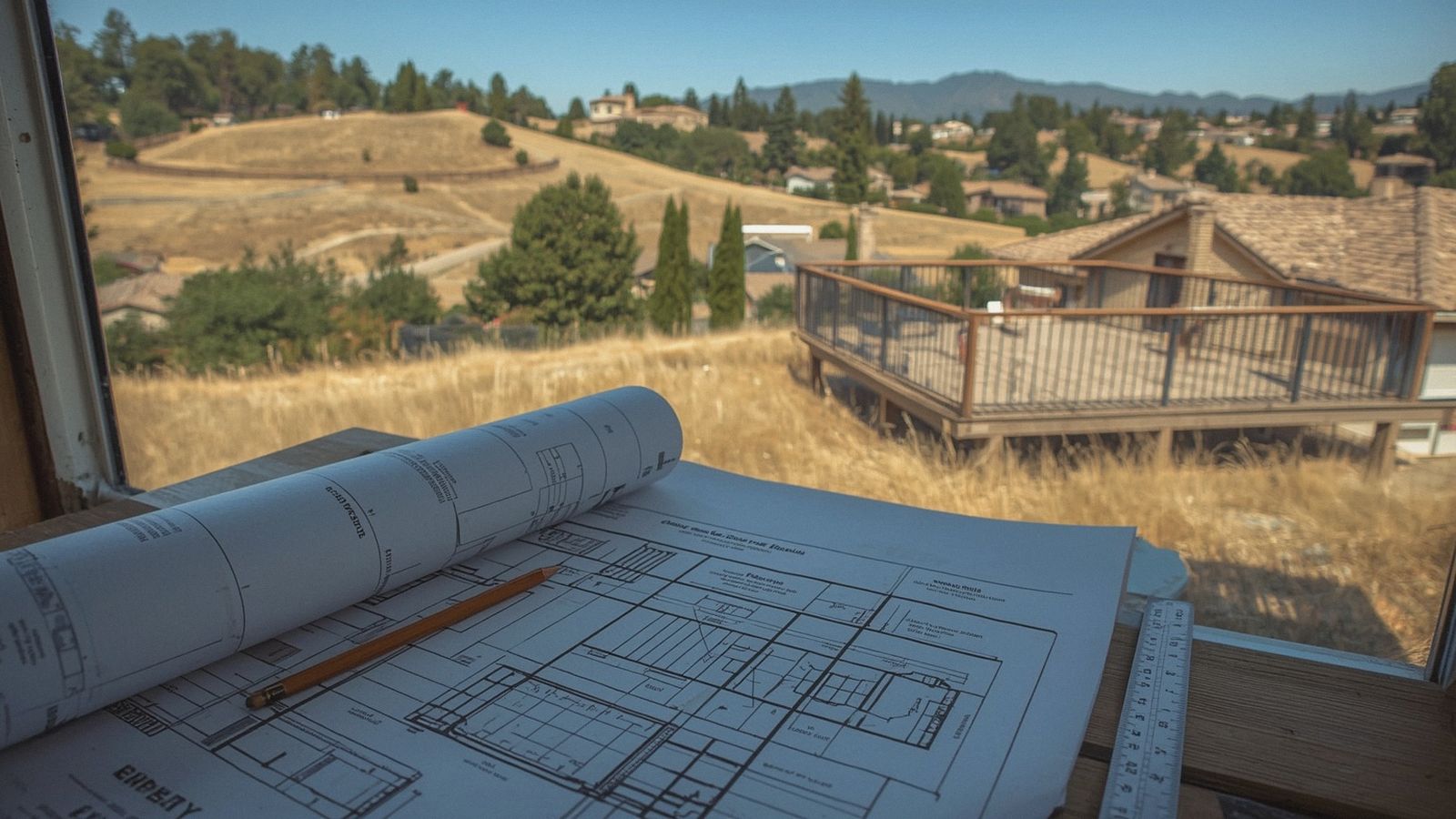
A written quote from us lists footage, material, finish, post count and anchorage, removal, permit fees and an expected schedule, so you can compare it line for line with anyone else's. If your HOA needs a drawing before it will approve the project, we produce that from the same measurements.
FAQ
Questions, Answered
Straight answers on cost, code, permits and materials. Still unsure? Call and ask.
How much does railing cost per linear foot in San Ramon?
For 2026, plan on roughly $65 to $135 per foot for standard wrought iron, $50 to $200 for powder-coated aluminum, $75 to $260 for cable and $150 to $600 for glass, installed. Interior stair railings often run $40 to $100 per foot. Corners, stairs, hillside access and permits all move the total, so a free on-site estimate gives the real figure.
Is cable or glass railing more expensive?
Glass is usually the more expensive of the two. Glass runs about $150 to $600 per installed foot, while cable runs about $75 to $260. Cable needs more posts because they sit about every 4 feet, but glass panels, base shoe or standoff hardware, and careful handling of tempered or laminated panels push glass into the premium tier.
Do I need a permit to replace my deck railing?
If the deck is more than 30 inches above grade, replacing the guard often requires a permit, but the rule varies by city and by how much of the railing changes. Permit fees typically run about $50 to $500. Confirm with your building department before work begins; we prepare the drawings and submittals as part of the job.
Why are Tri-Valley railing prices higher than national averages?
Bay Area labor costs more, many lots are sloped, and many homes sit under HOAs that require specific profiles, colors or drawings. Permit plan review adds time as well. National averages mostly reflect flat, easy-access decks. That is why we quote from ranges and always confirm with a free on-site measure instead of a phone estimate.
Need Help in San Ramon?
San Ramon Custom Railing builds custom iron, cable, glass and aluminum railings across San Ramon, CA and the Tri-Valley. If this guide answered your question, the next step is a free on-site measure and a written range. See everything we do on our homepage, or reach out now.